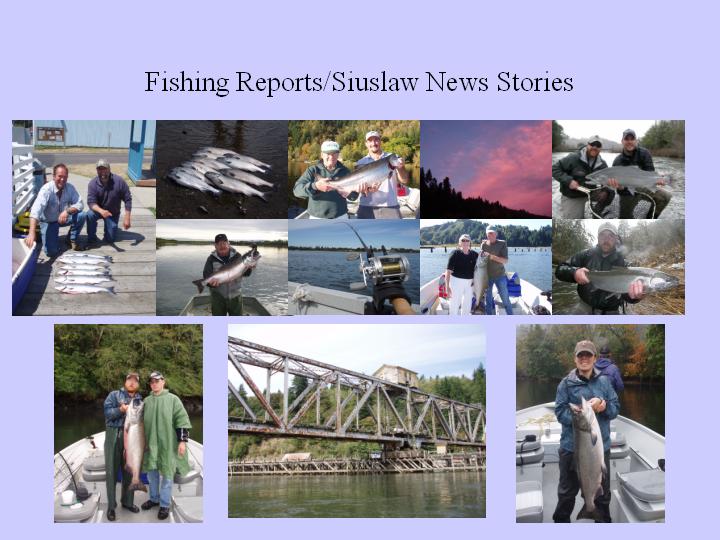
Over the past several days, it didn’t seem like my herring were getting bit very well. We’d pick up a fish here and a fish there, but not consistently. Last Thursday the guys fishing with me pulled herring for 7 hours and no fish. We switched over to North Country Lures’ Super Hoochies and hooked 7 fish in 2 hours. We’ve been hooking fish every day on the Super Hoochies and they’ve been outfishing herring on my boat.
Rigging Spinners
From your spreader, attach a 3-3 ½’ section of monofilament. Tie on a bead-chain swivel. Add another 3-3 ½’ section of monofilament. Attach your spinner. As for your lead line (dropper) I usually use a 12-24” length and 3-6 oz. It’s more important to be on the bottom than away from the boat, so go heavy. I’ve been using PowerPro 65 lb. test braided line for my mainline, Maxima Ultragreen 30 lb. test for my leaders and 20 lb. test for my dropper. 20 lb. test may sound too strong, but the dropper will still break before the leader and lead is expensive (and poisonous). I want that lead back if I can get it. By having a stronger dropper, you can usually get the lead back.
Strategies For Spinner Fishing
Here’s a few things that might help you pick up a fish the next time you’re on the water:
Try an irregular trolling pattern. Instead of trolling in a straight line for hours, do a little zigging and zagging if you have the room. Giving your bait a little weird speed and motion is sometimes enough to draw a strike.
Concentrate on transition zones. Look for areas that change depth, such as areas that change from deep to shallow. Fish on the move are often concentrated in these transition zones. Fishing a large stretch of water all the same depth? Fish the edges, trolling close to the bank.
Use scent on your spinners. Pro-Cure™ makes a great variety of gels that stick to the spinner blade for a long time.
Get Your Spinners At Bridgeport Market
Bridgeport Market is right next to the boat launch in Old Town and carries a complete supply of North Country Spinners, including the Super Hoochie. Bridgeport Market also has bait and ice and sells fishing licenses. Contact Jay or Cindy at 997-5091 or check out the Bridgeport Market website (www.bridgeportlandingcondos.com/market).
See you on the water,
Action Jackson
(Please send comments or questions to Action Jackson at 268-6944 or www.actionjacksonfishing.com)
Friday, September 26, 2008

Thursday, September 18, 2008
News From Around The Area
Chinook are starting to show in better numbers from Florence upriver. Tides are building this week and will bring more fish into the river. Also, if all the traffic in one part of the river is getting on your nerves, move upriver. Rolling salmon have appeared in Mapleton, so fish are throughout tidewater. While most folks are trolling herring, don’t be afraid to troll spinners or wobblers either. We were out last Thursday and the herring weren’t getting bit. We switched over to spinners and ended up with 3 fish to the boat, plus a couple of missed fish.
If It’s A Coho, Let It Go!
Oregon State Troopers have confiscated coho salmon mistakenly kept over the past several days. Not only will you get a ticket, you can also lose your fishing equipment. If you’re not sure which fish is which, here’s a few features you can use to identify your catch:
Coho (silver) salmon have small spots on the dorsal (top) side of the fish, and have spots on the upper lobe of the tail ONLY. Also, the coho salmon’s gumline is white or light gray. Males have a bulbous nose which helps in identification. Typically coho salmon are much smaller than chinook, but don’t use this as a distinguishing characteristic. Some chinook come back as 3 year-old fish and will be very similar in size to a coho.
Chinook (king) salmon usually have larger, irregular shaped spots on the back, and have spots on BOTH lobes of their tail. Also, chinook salmon have a black gumline (this is where the name “blackmouth” salmon comes from). Most chinook return to freshwater as 4 year-old fish, but may return older and larger. A salmon that is 30 lbs. or more is most definitely a chinook.
Several anglers have already caught coho in the river. Even though most of these fish are still out in the ocean, its not too early for them to be caught. Don’t use run timing as a distinguishing characteristic. There’s a nice display at the ramp in Old Town showing the differences between the two species.
Reminder: Lake Creek Closed To Salmon Fishing in 2008
Trooper Lea also wanted me to reminder folks that Lake Creek is closed to chinook fishing for 2008. There have been reports of people fishing the area and troopers don’t want to ticket anglers who didn’t know the regulations. Popular spots along Lake Creek have been posted, but signs have been removed. Oregon State Police will be watching Lake Creek carefully to make sure regulations are being followed.
See you on the water,
Action Jackson
(Please send comments or questions to Action Jackson at 268-6944 or www.actionjacksonfishing.com)
If It’s A Coho, Let It Go!
Oregon State Troopers have confiscated coho salmon mistakenly kept over the past several days. Not only will you get a ticket, you can also lose your fishing equipment. If you’re not sure which fish is which, here’s a few features you can use to identify your catch:
Coho (silver) salmon have small spots on the dorsal (top) side of the fish, and have spots on the upper lobe of the tail ONLY. Also, the coho salmon’s gumline is white or light gray. Males have a bulbous nose which helps in identification. Typically coho salmon are much smaller than chinook, but don’t use this as a distinguishing characteristic. Some chinook come back as 3 year-old fish and will be very similar in size to a coho.
Chinook (king) salmon usually have larger, irregular shaped spots on the back, and have spots on BOTH lobes of their tail. Also, chinook salmon have a black gumline (this is where the name “blackmouth” salmon comes from). Most chinook return to freshwater as 4 year-old fish, but may return older and larger. A salmon that is 30 lbs. or more is most definitely a chinook.
Several anglers have already caught coho in the river. Even though most of these fish are still out in the ocean, its not too early for them to be caught. Don’t use run timing as a distinguishing characteristic. There’s a nice display at the ramp in Old Town showing the differences between the two species.
Reminder: Lake Creek Closed To Salmon Fishing in 2008
Trooper Lea also wanted me to reminder folks that Lake Creek is closed to chinook fishing for 2008. There have been reports of people fishing the area and troopers don’t want to ticket anglers who didn’t know the regulations. Popular spots along Lake Creek have been posted, but signs have been removed. Oregon State Police will be watching Lake Creek carefully to make sure regulations are being followed.
See you on the water,
Action Jackson
(Please send comments or questions to Action Jackson at 268-6944 or www.actionjacksonfishing.com)
Friday, September 12, 2008
Central Oregon Offers Numerous Fly Fishing Options
Many of us couldn’t imagine being anywhere else than the Oregon Coast in the fall with salmon and cutthroat fishing in full swing, plus beautiful weather. And even though we can make a strong case that this is “Heaven on Earth”, there’s another part of the state that can also make that claim. The Sisters area of Central Oregon is absolutely beautiful and offers an incredible number of fishing opportunities close by.
Get Outfitted The Right Way Before You Start
The Fly Fisher’s Place in Sisters offers anything and everything you need to explore Central Oregon with a fly rod. From high quality rods and reels to clothing and waders to flies and tying materials, this is the place to begin your trip. Jeff Perin, owner of The Fly Fisher’s Place, is extremely knowledgeable about the area and how to fish it. Jeff has put together a team of very qualified guides who are expert boatmen, friendly and excellent anglers. If your just looking for advice on where to go and what to do, Jeff and his team will gladly help you out. We all know that fishing can be difficult and frustrating at times, so talking with a team of anglers with the inside scoop can really shorten the learning curve.
Choices, Choices
Sisters is in the heart of some of the best fishing in North America. Here’s a brief list of some of the best of the best:
Deschutes River – This world-famous river is close by, offering incredible trout and steelhead fishing in a unique setting. The Deschutes is long and varied with many opportunities and some dangerous water. If you’re planning a fishing trip, it’s best to go with an expert first.
Metolius River – This river, which flows cool, gin-clear and constant year-round, offers some of the toughest yet most rewarding fishing anywhere. The Metolius is spring fed and the trout tend to be very specific in what they choose to eat. Precision and stealth are the name of the game here.
Crooked River – The Crooked River is one of the most productive trout streams in Oregon, offering excellent numbers of redband rainbow trout. To find less competition try the Crooked River Gorge. The Gorge offers tougher access and good fishing.
Upper McKenzie and Upper North Fork of the Santiam – These west slope fisheries are also very close to the Sisters area. Too treacherous for boating, they offer unique walk-and-wade opportunities for adventurous anglers.
High Mountain Lakes – The options here are too many to mention. While many have good road access, others are hike-in and are lightly fished. Do your research ahead of time and have a trip you’ll remember forever.
Get In Touch With The Folks Who Know
To find out more about the numerous fishing options in the Sisters area, contact The Fly Fisher’s Place at (541) 549-3474 or at www.flyfishersplace.com. Contact a team of experts who can give you the information to be successful.
See you on the water,
Action Jackson
(Please send comments or questions to Action Jackson at 268-6944 or www.actionjacksonfishing.com)
Get Outfitted The Right Way Before You Start
The Fly Fisher’s Place in Sisters offers anything and everything you need to explore Central Oregon with a fly rod. From high quality rods and reels to clothing and waders to flies and tying materials, this is the place to begin your trip. Jeff Perin, owner of The Fly Fisher’s Place, is extremely knowledgeable about the area and how to fish it. Jeff has put together a team of very qualified guides who are expert boatmen, friendly and excellent anglers. If your just looking for advice on where to go and what to do, Jeff and his team will gladly help you out. We all know that fishing can be difficult and frustrating at times, so talking with a team of anglers with the inside scoop can really shorten the learning curve.
Choices, Choices
Sisters is in the heart of some of the best fishing in North America. Here’s a brief list of some of the best of the best:
Deschutes River – This world-famous river is close by, offering incredible trout and steelhead fishing in a unique setting. The Deschutes is long and varied with many opportunities and some dangerous water. If you’re planning a fishing trip, it’s best to go with an expert first.
Metolius River – This river, which flows cool, gin-clear and constant year-round, offers some of the toughest yet most rewarding fishing anywhere. The Metolius is spring fed and the trout tend to be very specific in what they choose to eat. Precision and stealth are the name of the game here.
Crooked River – The Crooked River is one of the most productive trout streams in Oregon, offering excellent numbers of redband rainbow trout. To find less competition try the Crooked River Gorge. The Gorge offers tougher access and good fishing.
Upper McKenzie and Upper North Fork of the Santiam – These west slope fisheries are also very close to the Sisters area. Too treacherous for boating, they offer unique walk-and-wade opportunities for adventurous anglers.
High Mountain Lakes – The options here are too many to mention. While many have good road access, others are hike-in and are lightly fished. Do your research ahead of time and have a trip you’ll remember forever.
Get In Touch With The Folks Who Know
To find out more about the numerous fishing options in the Sisters area, contact The Fly Fisher’s Place at (541) 549-3474 or at www.flyfishersplace.com. Contact a team of experts who can give you the information to be successful.
See you on the water,
Action Jackson
(Please send comments or questions to Action Jackson at 268-6944 or www.actionjacksonfishing.com)
Friday, September 5, 2008
“Fish On” Means Give Way
Last week I was out trolling on the river and a very nice couple was trolling very close to me. As we were talking about how beautiful the weather was (and other topics), one of their rods goes down. The first thing I did was ask if it was running at me, and, since it was, I reeled up my line as fast as I could so me didn’t get tangled. I maneuvered my boat to stay out of their way, got past them a safe distance, and dropped my bait back down. I watched them fight the fish for about 5 minutes or so and saw other boats very close to them. I couldn’t tell exactly how close until I talked to them later. When I caught back up with them on another pass, they told me that another boat actually trolled RIGHT INTO THE BACK OF THEIR BOAT! In the process, they lost the fish. I couldn’t believe it. At times it can be hard enough to hook a salmon, and losing it because of the carelessness of another boat is inexcusable. During the next few weeks its going to be getting more and more crowded on the coastal rivers. Considering what I saw last week I thought it might be a good time to talk about river etiquette again.
Reel ‘Em Up, Fast!
If another boat hooks a fish close by, have everyone in the boat reel their baits up as fast as possible. A salmon can peel 50 yards of line (or more) very quickly. If lines get tangled, the chances of landing the fish go down dramatically. If someone else’s fish gets around my line, I cut the line. I have several pre-tied leaders ready to go just in case something like this happens. It only takes a few minutes to re-tie, and the angler who lands a fish thanks to you doing your part will be forever thankful.
Steer Your Boat Clear
After all lines are in, get your boat out of the way. The boat fighting the fish has the right-of-way, and its up to you to stay clear. Remember, the boat with the fish is pretty busy and hectic, whereas you can stay out of the way much easier. According to U.S. Coast Guard protocol, a boat “Not Under Command” has the right-of-way over all other boats. After you are in the clear, drop your baits back down.
Let Other Boaters Know What’s Going On
In close quarters, communication is very important. Some boaters don’t pay as much attention as they should, so don’t be afraid to shout, wave your arms, or blow the horn if its handy. And if you’re in a boat that gets yelled at, don’t take offense. There’s a chance you weren’t paying attention like you should be, and if someone has a fish on they’re excited! Don’t blow their chances of landing their fish by being stubborn or inconsiderate.
See you on the water,
Action Jackson
(Please send comments or questions to Action Jackson at 268-6944 or www.actionjacksonfishing.com)
Reel ‘Em Up, Fast!
If another boat hooks a fish close by, have everyone in the boat reel their baits up as fast as possible. A salmon can peel 50 yards of line (or more) very quickly. If lines get tangled, the chances of landing the fish go down dramatically. If someone else’s fish gets around my line, I cut the line. I have several pre-tied leaders ready to go just in case something like this happens. It only takes a few minutes to re-tie, and the angler who lands a fish thanks to you doing your part will be forever thankful.
Steer Your Boat Clear
After all lines are in, get your boat out of the way. The boat fighting the fish has the right-of-way, and its up to you to stay clear. Remember, the boat with the fish is pretty busy and hectic, whereas you can stay out of the way much easier. According to U.S. Coast Guard protocol, a boat “Not Under Command” has the right-of-way over all other boats. After you are in the clear, drop your baits back down.
Let Other Boaters Know What’s Going On
In close quarters, communication is very important. Some boaters don’t pay as much attention as they should, so don’t be afraid to shout, wave your arms, or blow the horn if its handy. And if you’re in a boat that gets yelled at, don’t take offense. There’s a chance you weren’t paying attention like you should be, and if someone has a fish on they’re excited! Don’t blow their chances of landing their fish by being stubborn or inconsiderate.
See you on the water,
Action Jackson
(Please send comments or questions to Action Jackson at 268-6944 or www.actionjacksonfishing.com)
Thursday, August 28, 2008
News From Around The Area
Fall is just around the corner and the fish can feel it. Things are picking up and good fishing is just around the corner. Last week’s rain (over 2 inches in Mapleton) will cool the water down and draw fish in. Here’s what I’ve seen the last few days and what others are reporting:
Fish Are In On The Umpqua
A good bite has been happening on the Umpqua recently. Fish down toward Winchester Bay for a chance at both clipped Silvers and Chinook. Last week fish were caught up to Reedsport and above. Herring are the bait of choice and most anglers are running them with flashers. My experience is that there doesn’t seem to be as much debris in the water on the Umpqua, making it easier to run flashers. As with the Siuslaw, most boats move with the tide, making it easier to keep your presentation on the bottom and in the strike zone. Over the weekend there were quite a few boats, so fish the weekdays for less traffic.
Crabbing Picking Up
Crabbing is starting to get a lot better during the last couple of weeks. All your favorite crabbing bays (Alsea, Siuslaw, Winchester) are producing good catches. Best crabbing will be found during the incoming tide, close to the mouth. Recent rains should not slow down catches as there’s not enough fresh water to push crabs out. Many different baits will produce, including shad, tuna heads, chicken or turkey, salmon carcasses, etc.
Not Too Early For The Siuslaw
Though more fish are present down south on the Umpqua, a few fish are starting to show on the Siuslaw. Fishing will get better as the water cools. Some fish have been checked in for little effort.
Know Your Closed Area
Last Friday I ran into some very nice guys from the U.S. Coast Guard, Siuslaw River Station. They informed me that when the Rough Bay Warning Lights are on and the bar is closed, the area downriver from Marker #4 is restricted. If you have any questions, you can call the U.S. Coast Guard recorded message at (541) 902-7792. Next, you can tune your AM/FM radio to 1610 AM. You can also hail the Coast Guard directly on your VHF radio channel 16.
See you on the water,
Action Jackson
(Please send comments or questions to Action Jackson at 268-6944 or www.actionjacksonfishing.com)
Fish Are In On The Umpqua
A good bite has been happening on the Umpqua recently. Fish down toward Winchester Bay for a chance at both clipped Silvers and Chinook. Last week fish were caught up to Reedsport and above. Herring are the bait of choice and most anglers are running them with flashers. My experience is that there doesn’t seem to be as much debris in the water on the Umpqua, making it easier to run flashers. As with the Siuslaw, most boats move with the tide, making it easier to keep your presentation on the bottom and in the strike zone. Over the weekend there were quite a few boats, so fish the weekdays for less traffic.
Crabbing Picking Up
Crabbing is starting to get a lot better during the last couple of weeks. All your favorite crabbing bays (Alsea, Siuslaw, Winchester) are producing good catches. Best crabbing will be found during the incoming tide, close to the mouth. Recent rains should not slow down catches as there’s not enough fresh water to push crabs out. Many different baits will produce, including shad, tuna heads, chicken or turkey, salmon carcasses, etc.
Not Too Early For The Siuslaw
Though more fish are present down south on the Umpqua, a few fish are starting to show on the Siuslaw. Fishing will get better as the water cools. Some fish have been checked in for little effort.
Know Your Closed Area
Last Friday I ran into some very nice guys from the U.S. Coast Guard, Siuslaw River Station. They informed me that when the Rough Bay Warning Lights are on and the bar is closed, the area downriver from Marker #4 is restricted. If you have any questions, you can call the U.S. Coast Guard recorded message at (541) 902-7792. Next, you can tune your AM/FM radio to 1610 AM. You can also hail the Coast Guard directly on your VHF radio channel 16.
See you on the water,
Action Jackson
(Please send comments or questions to Action Jackson at 268-6944 or www.actionjacksonfishing.com)
Wednesday, August 20, 2008
Brining Herring
Hello Readers! I’ve recently been getting some questions on preparing herring for trolling. Here’s an quick and effective brine I like to use. Remember to experiment with different scents as it is a key to success. No single scent is the most effective every day.
Herring is probably the #1 bait for Fall Chinook salmon. If you talked to 100 salmon anglers, you’re likely to get that many different brines for herring! There are numerous scents and secret recipes that fishermen have, too many to go into here. Start with a basic recipe, and experiment. What’s that? You say you have the surefire, can’t miss formula? Shoot me an e-mail and I’ll try it out!
The Basic Recipe
This recipe will brine 4-6 dozen herring. Don’t need that many, cut back the ingredients equally to fit the amount of bait you want to brine. To eliminate unwanted scents, use latex gloves to put together the brine.
2 ½ gallons distilled water. You can use tap water, but let the water sit overnight. This allows chlorine to evaporate. Scent is very important. You want to make sure the herring only absorb the scents you want them to absorb.
3 tablespoons of Mrs. Stewart’s liquid bluing. This makes the herring’s scales really shine. Mrs. Stewart’s is not particularly easy to find, so don’t start asking around the night you need it. Randy’s Riverview Market in Mapleton stocks it, and local grocers can order it.
4 cups rock salt, canning salt, or non-iodized salt.
1 cup powdered milk. Powdered milk firms the herring without burning it.
Scent of your choosing. Popular scents include garlic oil (from a jar of minced garlic) or 2 tablespoons of pure anise oil.
Mix all ingredients together, making sure to allow time for the salt to dissolve.
Now, For the Herring…
Most herring purchased these days are “shrink wrapped” to preserve them and minimize freezer burn. Partially thaw the herring before you brine them. Make sure to poke holes in the package as you allow them to thaw. If you don’t, the plastic wrapping will pull scales off these delicate fish during the thawing process.
Letting Them Brine
You’ll want the herring to brine at least overnight. If possible, store them in a cool spot or refrigerate the herring while they brine. After brining, they can be refrozen. Frozen herring cut much better than soft herring, and you’ll lose fewer scales. If you’re fishing all day, put some herring in a small cooler that you’ll be opening a lot, and place others in another cooler that stays shut, keeping the bait frozen until you’re ready to use them.
Drop me a line and let me know what you think about these or other topics.
See you on the water,
Action Jackson
(Please send comments or questions to Action Jackson at 268-6944 or www.actionjacksonfishing.com)
Herring is probably the #1 bait for Fall Chinook salmon. If you talked to 100 salmon anglers, you’re likely to get that many different brines for herring! There are numerous scents and secret recipes that fishermen have, too many to go into here. Start with a basic recipe, and experiment. What’s that? You say you have the surefire, can’t miss formula? Shoot me an e-mail and I’ll try it out!
The Basic Recipe
This recipe will brine 4-6 dozen herring. Don’t need that many, cut back the ingredients equally to fit the amount of bait you want to brine. To eliminate unwanted scents, use latex gloves to put together the brine.
2 ½ gallons distilled water. You can use tap water, but let the water sit overnight. This allows chlorine to evaporate. Scent is very important. You want to make sure the herring only absorb the scents you want them to absorb.
3 tablespoons of Mrs. Stewart’s liquid bluing. This makes the herring’s scales really shine. Mrs. Stewart’s is not particularly easy to find, so don’t start asking around the night you need it. Randy’s Riverview Market in Mapleton stocks it, and local grocers can order it.
4 cups rock salt, canning salt, or non-iodized salt.
1 cup powdered milk. Powdered milk firms the herring without burning it.
Scent of your choosing. Popular scents include garlic oil (from a jar of minced garlic) or 2 tablespoons of pure anise oil.
Mix all ingredients together, making sure to allow time for the salt to dissolve.
Now, For the Herring…
Most herring purchased these days are “shrink wrapped” to preserve them and minimize freezer burn. Partially thaw the herring before you brine them. Make sure to poke holes in the package as you allow them to thaw. If you don’t, the plastic wrapping will pull scales off these delicate fish during the thawing process.
Letting Them Brine
You’ll want the herring to brine at least overnight. If possible, store them in a cool spot or refrigerate the herring while they brine. After brining, they can be refrozen. Frozen herring cut much better than soft herring, and you’ll lose fewer scales. If you’re fishing all day, put some herring in a small cooler that you’ll be opening a lot, and place others in another cooler that stays shut, keeping the bait frozen until you’re ready to use them.
Drop me a line and let me know what you think about these or other topics.
See you on the water,
Action Jackson
(Please send comments or questions to Action Jackson at 268-6944 or www.actionjacksonfishing.com)
Tie Your Own Spinner Rigs For Blueback
If you’re looking for some fishing in the river until good numbers of Chinook show, look no further than Searun cutthroat trout, or Blueback. Right now there are plenty around, they’re aggressive and great to eat. Local fish expert Lynn Hood tells me folks are doing very well in the vicinity of C&D Dock, but fish are available from Mapleton down (and probably above if you know where to look).
Spinners Are Popular
Running into Hood at The Riverview Market was inspirational. He was tying up a spinner for Blueback that looked very simple and effective. It reminded me of the anchovy spinners used at the mouth of the Rogue River for Fall Chinook. The big differences are that you don’t need a treble hook, and you don’t need heavy leader. Here’s what you’ll need to get started:
10-12 lb. leader. I thought about this one a lot. Some guys would say that this is too heavy for Blueback. It’s true – it is more than you need. But here’s why I say use it – if something much larger grabs your spinner, you want to have at least a fighting chance of landing it.
An assortment of 4-6 mm beads. Look for different colors such as orange, green, blue, chartreuse, yellow and red. Get some beads in each 4, 5 and 6 mm if you can find them. If you need help finding bead sources give me a call and I can point you in the right direction.
Plastic clevises. A lot of folks use wire or metal clevises and that’s fine. Let me tell you why I use the plastic – because you can change spinner blades quickly. Simply snap one off and put on another. And rarely do you lose a blade (unless you lose the whole spinner).
An assortment of #3 and #4 Colorado spinner blades. Try some of these popular colors: silver, brass, copper, and some painted blades (green, fluorescent orange, blue, etc.). There are many different finishes available. Again – if you need some help – I can tell you where to get started.
Baitholder hooks. These hooks have a long, straight shank that has barbs to help hold a nightcrawler on the hook. Experiment with different sizes to get what you like, but I often use something between a #1 and #4. Gamakatsu makes a very good Baitholder hook that’s sticky sharp out of the package and stays that way.
Very Simple, Very Easy
On approximately 36” of leader, tie on the hook, add 3 of the large beads, 3 of the medium beads, and 2 of the small beads. Add the clevis. Add the blade to the clevis. It doesn’t get any easier. On the river, add ½ nightcrawler and troll your spinner behind a Ford Fender™ or Cow Bell™. Don’t forget to use a small trolling rudder to keep your rig from twisting up.
The Blueback are in, so if you’re not catching switch colors, blades and location until you find the formula that works.
See you on the water,
Action Jackson
(Please send comments or questions to Action Jackson at 268-6944 or www.actionjacksonfishing.com)
Spinners Are Popular
Running into Hood at The Riverview Market was inspirational. He was tying up a spinner for Blueback that looked very simple and effective. It reminded me of the anchovy spinners used at the mouth of the Rogue River for Fall Chinook. The big differences are that you don’t need a treble hook, and you don’t need heavy leader. Here’s what you’ll need to get started:
10-12 lb. leader. I thought about this one a lot. Some guys would say that this is too heavy for Blueback. It’s true – it is more than you need. But here’s why I say use it – if something much larger grabs your spinner, you want to have at least a fighting chance of landing it.
An assortment of 4-6 mm beads. Look for different colors such as orange, green, blue, chartreuse, yellow and red. Get some beads in each 4, 5 and 6 mm if you can find them. If you need help finding bead sources give me a call and I can point you in the right direction.
Plastic clevises. A lot of folks use wire or metal clevises and that’s fine. Let me tell you why I use the plastic – because you can change spinner blades quickly. Simply snap one off and put on another. And rarely do you lose a blade (unless you lose the whole spinner).
An assortment of #3 and #4 Colorado spinner blades. Try some of these popular colors: silver, brass, copper, and some painted blades (green, fluorescent orange, blue, etc.). There are many different finishes available. Again – if you need some help – I can tell you where to get started.
Baitholder hooks. These hooks have a long, straight shank that has barbs to help hold a nightcrawler on the hook. Experiment with different sizes to get what you like, but I often use something between a #1 and #4. Gamakatsu makes a very good Baitholder hook that’s sticky sharp out of the package and stays that way.
Very Simple, Very Easy
On approximately 36” of leader, tie on the hook, add 3 of the large beads, 3 of the medium beads, and 2 of the small beads. Add the clevis. Add the blade to the clevis. It doesn’t get any easier. On the river, add ½ nightcrawler and troll your spinner behind a Ford Fender™ or Cow Bell™. Don’t forget to use a small trolling rudder to keep your rig from twisting up.
The Blueback are in, so if you’re not catching switch colors, blades and location until you find the formula that works.
See you on the water,
Action Jackson
(Please send comments or questions to Action Jackson at 268-6944 or www.actionjacksonfishing.com)
Subscribe to:
Posts (Atom)