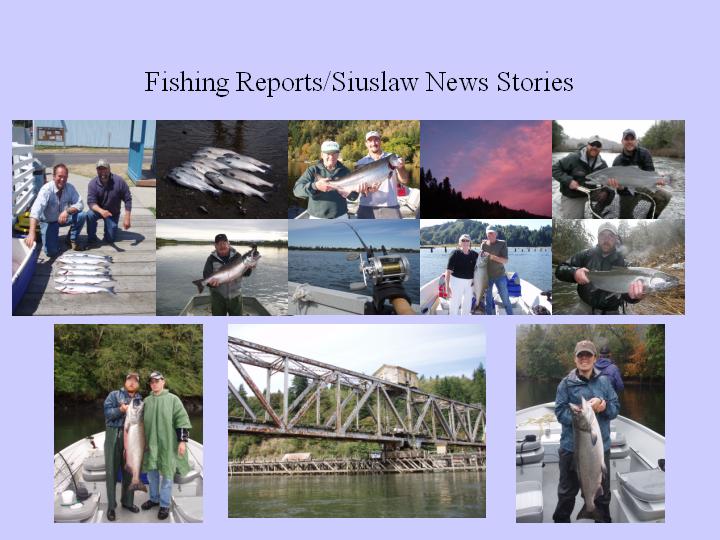
Since summer is here and the kids are out of school, I thought I’d dedicate this week’s article to kids and fishing. Introducing children to the outdoors through fishing will give kids a love for and appreciation of nature. Getting kids outside and away from the computer and video games will lead to happy and balanced children. And fishing is one of the best ways to bond with your kids or grandkids. Some of my best memories growing up are of dad and me fishing at the lake or on the river. It’s the kind of things your kids will remember all their lives.
Don’t Put Too Much Pressure On Kids
Putting too much pressure on kids can quickly ruin a fishing outing. Don’t expect kids to be up 2 hours before daylight and ready to go. Once on the water, don’t get in a rush to be in a certain spot. Take time to show kids what you’re doing and why you are doing it. Most knots are simple enough that a child of 7 or 8 can easily tie them. If the youngsters that are out on the water with you are getting bored with fishing and want to check out snakes, frogs or bugs, that’s great too! Remember, a day on the water is supposed to be fun.
Take Kids Fishing Where the Fish Are Biting
Make your first few trips to lakes where success is fairly certain. In the spring, many area lakes are stocked with rainbow trout that are very willing to bite. Later in the summer, Umpqua River smallmouth bass get very active and can be caught in large numbers. Yellow perch and crappie in local lakes can be a lot of fun to catch, and are also great eating. Ocean salmon can be very active and plentiful, especially in mid to late summer. Avoid sitting on anchor for hours hoping to hook a sturgeon. Save those trips for older children who are really interested and won’t get discouraged after a few hours of boredom. Whatever fish you decide to go after, catching them will keep the kids interested.
Pick A Nice Day
Sunshine and warm weather days are a great time to bring kids fishing. Save those cold and rainy steelhead trips for teenagers who show a strong interest in fishing. Not all good fishing comes during the harshest weather. Pack a picnic lunch, bring some sunscreen and swimming trunks, and head out for the water. Finally, if you are taking the boat out, remember to have life jackets for everyone on the boat, and that kids under 12 are wearing them at all times.
See You On The Water,
Action Jackson
(Please send comments or questions to Action Jackson at 268-6944 or www.actionjacksonfishing.com)
Wednesday, July 1, 2009

Wednesday, June 17, 2009
New Study Shows Hatchery Steelhead Genetically Impaired
Researchers at Oregon State University who have been studying wild and hatchery steelhead interactions since 1991 have concluded that hatchery steelhead are less fit when it comes to reproduction than their wild counterparts. The ability to survive and successfully reproduce, also known as reproductive fitness, is markedly less even in the wild-born offspring of hatchery fish. In other words, the impairment can’t be “bred out” of these fish.
The OSU study found that a fish hatched in the wild of two hatchery-reared steelhead averaged 37% the reproductive fitness of fish with two wild parents, and 87% reproductive fitness if one parent was hatchery-reared and one parent was wild. The study also showed that reproductive fitness differences were still obvious after a full generation of natural selection in the wild. And this study is not the first of its kind: a 2007 report published in the journal Science showed that ocean migrating hatchery fish produced far less offspring than those with wild parents.
In the OSU study, conducted on the Hood River (tributary of the Columbia River), it was thought that using captive wild fish as brood stock would lessen the problem of impaired reproductive fitness. Wild brood stock did not lessen the problem. It comes down to natural selection – or the lack thereof. Fish that do well in the safe, predator-free world of the concrete raceway are not the same fish that do well in the danger-filled real world of a free-flowing river.
Death By A Thousand Cuts
The implication is that hatchery fish, which can and do survive to spawn in the wild, can harm wild fish by breeding with them and reducing their reproductive fitness. And while a few hatchery fish would not make a big difference in a strong wild population, a huge impact would be made on a wild salmonid population with few fish. Add this problem with competition for food and space as juveniles, loss of habitat, droughts, floods, poor ocean conditions, overharvest, poaching, pollution and dams, and its little wonder that salmonid populations are in peril.
Its Not Too Late
Fortunately for us, wild salmon and steelhead are still with us. Hatchery fish have been pumped into the Siuslaw and other rivers for decades, yet wild fish still return each fall and winter to spawn. This makes me optimistic that if we make the right decisions regarding wild fish, they will eventually return in greater and greater numbers.
See you on the water,
Action Jackson
(Please send comments or questions to Action Jackson at 268-6944 or www.actionjacksonfishing.com)
Thursday, June 11, 2009
Are You A Giver Or A Taker?
So I guess I’m making every other fisherman on the river mad. According to another local angler who claims to be “in the know”, the views I express through the Siuslaw News are destroying the fishing here. While I normally brush this person’s comments aside (I seem to be a frequent target of his attacks), it got me to thinking: am I giving back to the sport I love or simply taking what I can?
Are You A Taker?
Here’s my definition of a taker: someone who’s not worried about the number of fish returning, just so long as he can get his. The taker isn’t worried about future opportunities – just the here and now. The taker refuses to acknowledge the validity of spawning grounds surveys because he knows there’s plenty of fish. A taker is only concerned with any reduction in his opportunities – not really caring about other anglers. The taker is generally the last one you’d expect to give up any fish-catching tips, but the first to tell you a dozen stories about how great of a fisherman he is. After all, the taker figured out how to catch fish all by himself (yeah, right). And rather than admitting that he might be part of the problem, the taker will always blame some other person or group.
What’s So Great About Being A Giver?
A giver is willing to give up his own short-term opportunity for the big picture. A giver is not necessarily concerned with filling up the freezer, but realizes the value of wild fish goes way beyond the dinner plate. The giver respects the journey that our salmon and steelhead complete before they come home. The giver wants future generations to have the chance to experience what we’ve come to take for granted. Instead of complaining about what is lost, the giver takes action and tries to move things in a positive direction.
Be Part Of The Solution
I invite all of my readers to make a difference in our local fisheries. There are many different things you can do to give back: take someone fishing who might not be able to go by themselves. Leave your favorite fishing hole cleaner than you found it. Give fellow anglers a wave and a smile instead of a cross look when they fish next to you. And if you happen to experience some good fortune on the water, share your knowledge with other fisherman.
Thanks to all of you who make a difference. I know there are more givers than takers out there. And to that fine fellow who says (but probably doesn’t really think) that I’m single-handedly destroying fishing on the Siuslaw: you are always welcome to express your concerns to me personally. At least I’ll have some respect for that.
See you on the water,
Action Jackson
(Please send comments or questions to Action Jackson at 268-6944 or www.actionjacksonfishing.com)
Wednesday, June 3, 2009
ODFW Commission To Adopt Fall Chinook Regulations June 9
Due to anticipated poor returns, ODFW Commission members are expected to adopt some of the most restrictive fall chinook fishing regulations ever forwarded by biologists. Recommendations include reduced bag limits, new angling deadlines and the closure of the Nehalem basin to all chinook fishing. The Nehalem River is (was) home to one of the biggest chinook runs on the north Oregon coast. And while chinook fishing will be even more limited than last year, ODFW staff is recommending wild coho fisheries in tidewater portions of several different river systems – including the Nehalem, Yaquina, Coos and Coquille Rivers.
Why Are Coho Up And Chinook Down?
Chinook and coho salmon have different life histories, which makes it possible for these very similar species to return at different rates. Chinook and coho have different age structures – coho salmon return almost exclusively as 3 year-old fish, with a small number returning as 2 year-olds (jacks). Conversely, 4 and 5 year-old fish make up a significant part of the chinook return. Favorable ocean conditions have only taken hold (again) since 2007. This means that a large part of this year’s returning chinook headed into bad ocean conditions as juveniles, thus experienced higher mortality and lower overall returns. The coho salmon, with less turnaround, went to sea in better conditions and we are seeing greater returns. All things being equal (and we know they’re not), we will see a better return of fall chinook starting in 2010.
Commission Is A Wild Card
The ODFW Commission does not always follow staff recommendations, especially on controversial issues. For instance, on the Nehalem River how can you allow fishing for coho while chinook is shut down completely? How do you minimize the impact on chinook? Certainly some will be caught (and killed) incidentally? Also, Oregon Coast coho salmon are listed as threatened under the Endangered Species Act. The model of Siltcoos and Tahkenitch lakes does not fit the Nehalem fishery because on the lakes, there’s no chance of depleting an imperiled chinook run.
Regulations Not Much Different Than Last Year
Don’t expect any changes from last year’s regulations: the daily/season limit for chinook will most likely be 1/5 again this year. Also, angling is likely to be closed on Lake Creek, the mainstem above Lake Creek and on NF Smith River.
As always, your thoughts, calls, and e-mails are welcome on this and other related issues.
See you on the water,
Action Jackson
(Please send comments or questions to Action Jackson at 268-6944 or www.actionjacksonfishing.com)
Monday, June 1, 2009
Now A Good Time For Stream Trout Fishing
During the past few days, people have been asking about where to go to catch some nice trout. My first instinct was to tell them about the many local lakes that have been or will be stocked. Mercer, Munsel, Alder, Cleawox and others are regularly stocked with catchable rainbow trout, with some “trophy” fish also available. These lakes can have some fast action and are good places to introduce kids to fishing. But there are other options. If you’re looking for an adventure, fewer people and a chance to see the beauty the Oregon Coast Range offers, head for one of the many streams that just opened up to trout fishing over the weekend.
Check Regulations Before Heading Out
The Oregon Dept. of Fish and Wildlife fishing regulations can sometimes be confusing, but if you take just a few minutes you can figure out the applicable rules for the stream you want to fish. There’s even a map that shows which streams are open. Be aware that many streams are closed to the use of bait, including nightcrawlers and eggs. This is to protect the juvenile salmon and steelhead, which are still in streams in large numbers. The ODFW regulations will also point you in the right direction on places to fish. Many tributaries of the Siuslaw River are open to trout fishing – including Sweet, Lake, Indian and Deadwood Creeks. The water levels are low enough to allow wading for long stretches. There’s no better way to cool off during a hot summer day.
Gearing Up
If you’re spin-fishing, small spinners are a great way to catch cutthroat trout. Silver, gold, copper and black have always been top colors for me. Please consider using single, barbless hooks when trout fishing as treble hooks can really make for a tough release for smaller fish. Concentrate on moving water – riffles offer cover and food and are a great place to find fish. An ultra-light rod and reel combination with 4-6 lb. test line is perfect for summer trout fishing. Another tip – fishing early and late often produces the best fishing. Another great way to catch stream trout is with a fly rod. Try small bead-heads and other nymphs fished under an indicator in riffles and tailouts.
Trout fishing in streams is one of the most rewarding forms of fishing. Wading the streams in summer gives you the chance to see all kinds of wildlife, get away from the crowds and maybe catch a few hard fighting and tasty cutts.
See you on the water,
Action Jackson
(Please send comments or questions to Action Jackson at 268-6944 or www.actionjacksonfishing.com)
Thursday, May 21, 2009
Getting Your Boat Ready For The Season
Its that time of year again. Its time to remove your boat cover, hose out your boat, and get ready to take family and friends to the lake for a summer full of fish and fun. Maybe you’re a new boat owner wondering what you need to be comfortable and safe on the river. Fear not friends, for Action Jackson is about to tell you what you need and what you’ll want to have on the water.
Before You Leave Home
Proper engine maintenance is the key to well-performing and long-living outboard motors. Change your engine’s oil and filters. Drain and refill gear lube. Check spark plugs, hoses running to fuel tanks and battery connections. Check trailer lights, trailer tires and lubricate trailer wheel bearings. Trailers take a beating year after year and are often overlooked when preparing the boat for the upcoming season. A blown tire or frozen wheel bearings can be very dangerous. Take the time to check your trailer, or take it in to folks who specialize in tires and wheels. Many modern outboard motors can be connected to a garden hose (with “ear” muffs, which use suction cups to feed water to your motor’s lower unit intake) and allow you to test your motor in the driveway. Start up your motor and make sure everything works as it should. I also recommend having a small tool box in the boat with some emergency supplies (screwdrivers, socket set, extra spark plugs, spare boat plug, duct tape, zip ties, pliers). Even if you aren’t mechanically inclined, you’ll be able to tighten up a bolt or stop a leak in a gas line.
Safety First
Depending on the size of your boat, federal and state regulations require different life saving equipment. Boats less than 16 feet (including canoes, kayaks and rafts) must have a Type I, II, or III personal flotation device for every person on board. Boats over 16 feet (except for canoes and kayaks) must have, in addition to PFDs for every person, must have a Type IV throwable flotation device. All flotation devices must be readily available for persons on board. My advice is to spend a little extra to get PFDs that are more comfortable and WEAR THEM AT ALL TIMES. Children under 12 must wear flotation devices at all times, NO EXCEPTIONS. For kids, make sure flotation devices fit properly and are comfortable.
Motor boats are also required to carry lights, fire extinguishers and emergency signal devices. The Oregon State Marine Board has a great website that lists complete requirements, based on boat length, http://www.boatoregon.com/Laws/Requirements.html. You can also call them at (503) 378-8587 for more information.
Another overlooked safety item is an anchor and anchor rope. Imagine crabbing near the mouth of the Siuslaw River when the motor suddenly dies. You could be pushed against the jettys or swept out to the bar before help arrives. An anchor might make the difference between a close call and disaster. And while an anchor might not hold in strong winds and currents, it will at least slow the boat down.
A Word About Boater Education
This year, all boaters regardless of age will be required to carry Operator’s cards. According to the Oregon State Marine Board website, citations for non-compliance have increased to $94. Younger boaters (less than 15 years old) also are restricted in certain ways. Courseroom classes are available statewide and will teach folks something new, guaranteed. You can also take a Marine Board-mandated test online. More information can be found on the Boat Oregon website http://www.boatoregon.com.
See You On The Water,
Action Jackson
(Please send comments or questions to Action Jackson at 268-6944 or www.actionjacksonfishing.com)
Wednesday, May 13, 2009
Nature Has Its Reasons
Over the past several weeks, I’ve had the pleasure of introducing Siuslaw Elementary’s 4th graders to the Smolt Trap—and teaching them about the work we do there. When we talk about the salmon, steelhead and cutthroat trout that make up a majority of the catch, I am amazed by how much the kids know. While most of the conversations are about anatomy, physiology and natural history, ultimately some of the discussions veer toward the cruelty of nature. Kids ask questions like, “do the fish eat each other?” and “why do the fish have to die after they spawn?” Some of the questions I get are so profound that I couldn’t begin to address them in a few hundred words. What I can do is offer some insight about why nature’s cruelty is necessary.
You’ve Got Two Chances: Slim and None (And Slim Just Swam Away)
Even before a salmon hatches, it is already a highly sought after food source. Other fish will attempt to feed on the eggs as they’re being deposited in the gravel. Cutthroat trout will stage behind spawning salmon in an attempt to pick up eggs. For the trout, eggs are a nutritious and plentiful food source that will help them put on the extra energy needed for their own upcoming spawn. As the salmon fry emerge from the gravel, trout, sculpin and larger juvenile salmon are all looking to feed on them. Blue herons and kingfishers expertly wait for recently hatched fish as well.
Not only do salmon fry have to survive the onslaught of predators, they must somehow survive flood conditions that can suffocate, crush, or leave them stranded in an isolated pool to be found by a raccoon or wash them downstream before they are prepared.
On their migration downstream, behind every boulder and logjam, in every riffle and pool, in front, behind, below and above them, awaits another potential predator. One of the saving graces for these fry is that they tend to migrate in large numbers. So while large numbers fall prey, some are able to make it to the next stage of the journey.
This all sound harsh to us humans, but it’s nature’s way of making sure only the best survive. The slow, the weak, the small, the careless (and the unlucky) never even make it out of Knowles Creek. And the trials don’t end—ever. Once juveniles make it to the main river, gulls, cormorants, otters, larger trout, pikeminnow and many other predators take their turn at weeding out the weak. All this time, juvenile salmon have to worry about their food, looking for invertebrates and smaller fish on which to feed.
By the time the juvenile salmon reach saltwater, things aren’t any easier. Maturing salmon have to be fortunate enough to find plentiful food and dodge the many predators. Seals and sea lions, orcas, salmon sharks and, another effective predator, man, all take ocean salmon in large numbers. As adult salmon stage in the ocean and in their home rivers, commercial and sport fisherman further reduce the salmons’ numbers. Being taken out of the mix in this case is more about bad luck for a salmon than a comment on its overall fitness.
What I tell the 4th graders is this: nature has its reasons for taking so many of the young salmon. It’s to help the next generation of salmon be as strong as possible. Only the best are able to make it home to spawn.
See you on the water,
Action Jackson
(Please send comments or questions to Action Jackson at 268-6944 or www.actionjacksonfishing.com)
Subscribe to:
Posts (Atom)