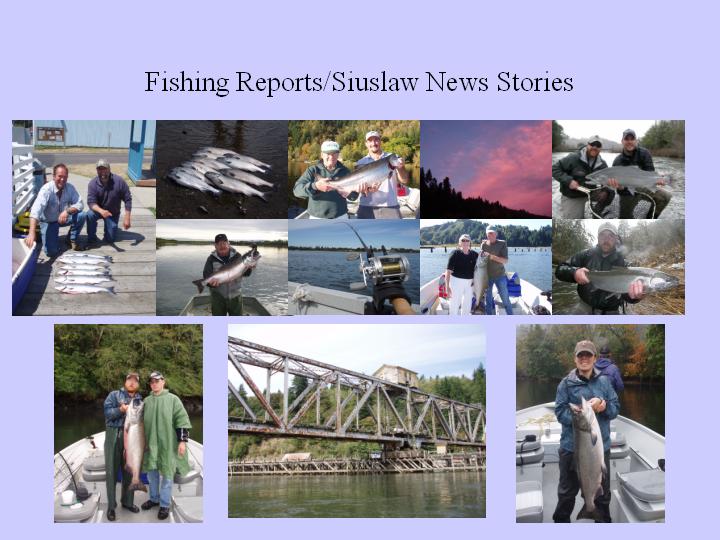
Steelhead season is quickly approaching, but coho fishing on the lakes is not over. In addition to the lakes, there are other opportunities around that are sure to interest you. Here’s the latest on what’s going on…
Siltcoos Lake Still Fishing Well
Over Thanksgiving week, fishing was very good, according to Dean Hendricks, North Country Lures. Thursday was red-hot, with many fish caught. Many anglers caught fish using North Country Lures’ Sonic Bell and Plugs (available at Bridgeport Market and The Sportsman). Other days were hit-and-miss. There are plenty of fish around, but with cold water temps (49 degrees F) the key is to keep moving to find biters. The dam was open last week and water levels in Siltcoos are several feet down. A reminder that this fishery closes on Dec. 31. As for Tahkenitch, I haven’t heard many good reports this season. I’ve been down there at least 6 times and don’t have much to show for the effort. A big change from last year.
Crabbing Holding Up
Reports I’m getting are that crabbing is holding up well in the lower river. Expect good crabbing until we get a big push of fresh water. Try all the usuals – fish heads, turkey, etc. If you’re not getting crabs, keep moving your pots until you find them.
Steelhead Forecast For Siuslaw
According to ODFW biologist George Westfall, there’s no good method for predicting steelhead returns to the Siuslaw. That said, returns should be in the range of approx. 4% based on previous years’ returns, good ocean conditions, smolts that were bigger than average when released and good freshwater conditions for outmigrating fish. Also, summer steelhead returns of stocks on the Oregon coast (Siletz and Rogue) were excellent, which hints at good winter fish returns. The steelhead returning this winter were released in 2007 from two different locations: 35,000 at Green Creek (Lake Creek) and 49,000 at Whittaker Creek (mainstem). In addition to these fish, look for a large number of older 3-salt fish to be in the mix. Expect 2500-3500 clipped steelhead this winter, with the possibility of more.
Munsel Producing Big Trout
Hendricks also let me know that some big trout are being caught on Munsel Lake. Anglers have been trolling deep (20 feet) and are landing rainbow trout in the 3 lb. (and larger) category. My guess is that similar catches can be made on other area lakes if the effort is put in.
As For The River
River levels are still too low for good boating, and will be so for the next few days. Fresh chinook can still be found in the vicinity of Tide, but you’ll have to search them out. There’s still plenty of water for fish to make their way upriver. All in all, a poor chinook season, but better than last year. Look for better numbers for the next several years. When I get some spawning fish numbers, you will be the first to know.
See you on the water,
Action Jackson
(Please send comments or questions to Action Jackson at 268-6944 or www.actionjacksonfishing.com)
Monday, December 8, 2008

Wednesday, November 19, 2008
How Close Is Too Close?
Last week I pulled my boat into the Siltcoos River, which might raise a few eyebrows. It sure did from the bank anglers who were throwing spinners off docks nearby. I positioned the boat upstream, dropped the anchor, and my guest and I dropped back some plugs to work in the current while we had a sandwich and discussed our next move. I had no intention of staying long, just long enough to eat lunch. One of the people tossing spinners wasn’t very happy about me being there. He yelled something to the effect, “You have that nice boat but you’re right there?” While I basically told him that he didn’t own the river, this encounter got me to thinking: how close is too close?
Where There’s Fish, Expect Crowds
We’d all like to have a river full of salmon to ourselves. But let’s face it: where there’s fish, there’s going to be competition from other anglers. More fish, more crowds. Crowds below hatcheries on the Sacramento River system in California typically number in the hundreds when fishing is good. Anglers can be lined up three-deep waiting to make a cast. Fistfights and thrown rocks are common. We here on the Central Coast don’t have this problem, but there are certain spots where the fish are confined and there’s going to be conflicts between bank anglers and boaters. The Siltcoos River is one of these spots. The Siltcoos Outlet attracts a lot of attention because every coho salmon coming into the lake is moving right through the river. And it’s the only place that has good bank access. Boats want to get in the river too because fish are ocean-fresh and confined to a small channel.
How To Interact Peacefully
Boaters should not anchor directly in front of bank fisherman, period. This is poor etiquette in a small river. Bank fisherman, if the boat is there first, don’t expect them to move just because they can go anywhere in the lake. It doesn’t always work like that, especially if the lake is rough. Boaters, leave enough room for bank fisherman to cast. Bankies, don’t cast over boaters’ lines just to try to make a point. If you have to talk it out, try to do so in a non-confrontational manner. If you start conversations in a nasty manner, nothing else you say will be heard.
Pressure On Siltcoos
Fishing pressure on Siltcoos this fall has been the most since the lakes were re-opened. There have been a couple of days when the parking lot at Westlake was FULL. I’m sure that all those who love and appreciate this fishery are hoping that Oregon Dept. of Fish and Wildlife will make sure that escapement is still being met and that enough coho are making it up the tributaries to spawn. I have a feeling that pressure will increase over the next several years.
See you on the water,
Action Jackson
(Please send comments or questions to Action Jackson at 268-6944 or www.actionjacksonfishing.com)
Where There’s Fish, Expect Crowds
We’d all like to have a river full of salmon to ourselves. But let’s face it: where there’s fish, there’s going to be competition from other anglers. More fish, more crowds. Crowds below hatcheries on the Sacramento River system in California typically number in the hundreds when fishing is good. Anglers can be lined up three-deep waiting to make a cast. Fistfights and thrown rocks are common. We here on the Central Coast don’t have this problem, but there are certain spots where the fish are confined and there’s going to be conflicts between bank anglers and boaters. The Siltcoos River is one of these spots. The Siltcoos Outlet attracts a lot of attention because every coho salmon coming into the lake is moving right through the river. And it’s the only place that has good bank access. Boats want to get in the river too because fish are ocean-fresh and confined to a small channel.
How To Interact Peacefully
Boaters should not anchor directly in front of bank fisherman, period. This is poor etiquette in a small river. Bank fisherman, if the boat is there first, don’t expect them to move just because they can go anywhere in the lake. It doesn’t always work like that, especially if the lake is rough. Boaters, leave enough room for bank fisherman to cast. Bankies, don’t cast over boaters’ lines just to try to make a point. If you have to talk it out, try to do so in a non-confrontational manner. If you start conversations in a nasty manner, nothing else you say will be heard.
Pressure On Siltcoos
Fishing pressure on Siltcoos this fall has been the most since the lakes were re-opened. There have been a couple of days when the parking lot at Westlake was FULL. I’m sure that all those who love and appreciate this fishery are hoping that Oregon Dept. of Fish and Wildlife will make sure that escapement is still being met and that enough coho are making it up the tributaries to spawn. I have a feeling that pressure will increase over the next several years.
See you on the water,
Action Jackson
(Please send comments or questions to Action Jackson at 268-6944 or www.actionjacksonfishing.com)
Friday, November 14, 2008
Spawning Fish Surveys Track Returns, Help Biologists
Every fall on fish-bearing streams all over the Oregon coast, fisheries professionals wade and raft streams counting spawning fish. On Knowles Creek in Mapleton, U.S. Forest Service employees and volunteers have been conducting surveys throughout the entire watershed since 2000. Having taken part in these surveys for the past 5 years, I can tell you there are few other fisheries-related jobs that are as rewarding.
What You’re Looking For
On Knowles Creek, surveyors wade sections from bottom to top, counting live and dead salmon, jacks, redds (nests) and noting other fish observed (such as steelhead and cutthroat trout). Weather conditions, stream levels and visibility are recorded for each stream section, as these factors affect how many and how well fish are seen. Careful observation helps surveyors tell the difference between coho and chinook salmon. Where fish actively spawn also clues surveyors in to what species they’re looking at – chinook prefer lower reaches on Knowles Creek while coho prefer upper reaches and tributaries. Carcasses of dead fish are cut at the tail so they aren’t counted again on future surveys.
Why Surveys Are Useful
Spawning fish surveys are one of the tools used by state and federal fisheries managers to determine run sizes and enact regulations that are in the best interest of the salmon. For instance, poor spawning fish numbers over the past two seasons was a “red flag” to fisheries managers and was a factor in reducing daily and seasonal bag limits for fall chinook on the coast. On Knowles Creek, spawning fish surveys help managers determine the success of habitat restoration projects that were started in the early 1990’s. So, spawning fish surveys, along with data collected at the smolt trap and snorkel surveys help give managers a better idea of freshwater production in Knowles Creek.
Volunteers Welcome
If you’d like to see some spawning fish for yourself, we’re always looking for volunteers to help us complete these surveys. The wading can be physically demanding, but the sites and sounds of Knowles Creek in the winter more than make up for it. Contact Paul Burns, U.S. Forest Service, (541) 902-6953 or call me for more information.
See you on the water,
Action Jackson
(Please send comments or questions to Action Jackson at 268-6944 or www.actionjacksonfishing.com)
What You’re Looking For
On Knowles Creek, surveyors wade sections from bottom to top, counting live and dead salmon, jacks, redds (nests) and noting other fish observed (such as steelhead and cutthroat trout). Weather conditions, stream levels and visibility are recorded for each stream section, as these factors affect how many and how well fish are seen. Careful observation helps surveyors tell the difference between coho and chinook salmon. Where fish actively spawn also clues surveyors in to what species they’re looking at – chinook prefer lower reaches on Knowles Creek while coho prefer upper reaches and tributaries. Carcasses of dead fish are cut at the tail so they aren’t counted again on future surveys.
Why Surveys Are Useful
Spawning fish surveys are one of the tools used by state and federal fisheries managers to determine run sizes and enact regulations that are in the best interest of the salmon. For instance, poor spawning fish numbers over the past two seasons was a “red flag” to fisheries managers and was a factor in reducing daily and seasonal bag limits for fall chinook on the coast. On Knowles Creek, spawning fish surveys help managers determine the success of habitat restoration projects that were started in the early 1990’s. So, spawning fish surveys, along with data collected at the smolt trap and snorkel surveys help give managers a better idea of freshwater production in Knowles Creek.
Volunteers Welcome
If you’d like to see some spawning fish for yourself, we’re always looking for volunteers to help us complete these surveys. The wading can be physically demanding, but the sites and sounds of Knowles Creek in the winter more than make up for it. Contact Paul Burns, U.S. Forest Service, (541) 902-6953 or call me for more information.
See you on the water,
Action Jackson
(Please send comments or questions to Action Jackson at 268-6944 or www.actionjacksonfishing.com)
Wednesday, November 5, 2008
News From Around The Area


Fall is finally here. Rains and wind arrived this weekend and is predicted for the next few days. There’s plenty going on both on the river and on the lakes for salmon and trout. Here’s the latest:
Siltcoos Lake Producing Well
Last week I took folks out to Siltcoos 3 days, and we limited with big, beautiful Coho salmon all 3 trips. We also released several fish and caught many jacks and trout. The dam was opened for at least one day last week, and should be open continuously with storms coming. We were successful fly fishing and tossing spinners, but best catches came trolling plugs in Maple Arm and Fiddle Arm. Wiggle Warts™ in pink and orange produced best. I trolled relatively slow and made sure the plugs were far enough behind the boat (40-50 feet) to get the maximum dive. While we’re on the subject of plug fishing, anglers should take the time to change out the treble hooks on plugs. Add a siwash (single) hook on a small barrel swivel to the split rings on the plug. Size #1 or #2 Gamakatsu siwash hooks are perfect for small-medium size plugs. A lot of folks feel that treble hooks are better, but believe me the single hooks don’t miss much. And if you plan on releasing dark or small fish, the siwash hooks do much less damage. This is especially true for the small trout that sometimes take these plugs.
Tidewater Fishing
As of last week, large, fresh Chinook were still being checked at the ramp at Old Town. I got a tip from a very reliable source that good fish were still being caught in the Cushman/Dairy Hole vicinity on the Siuslaw. While Chinook aren’t holding in the lower river like they did back in September, you can still intercept fresh fish in the lower river. And you won’t have to dodge any other boats. The effort on the river has fallen off the table. There’s nobody out there fishing! Get out there, cover some water (read: troll) and find some chrome-bright fish.
River Fishing
Rising river levels will bring a mix of dark and bright fish into the river from The Forks down. A reminder that the river is CLOSED above The Forks and CLOSED for all of Lake Creek to prevent snagging and poaching. Bobber fishing with eggs will produce well over the next several weeks in deeper holes and slots. Here’s a couple of things to consider: please gently release any fish you don’t want to keep and be sure to pack out your trash. Bring an extra bag and pack out the other guy’s trash too. Nothing is worse than getting down to your favorite spot and see shrimp and egg containers everywhere. Leave it looking better than you found it.
See you on the water,
Action Jackson
(Please send comments or questions to Action Jackson at 268-6944 or www.actionjacksonfishing.com)
Wednesday, October 29, 2008
.JPG)

Hello Anglers!
Here's a couple of shots of chinook from the river from the last few days. I've been fishing Siltcoos Lake the last couple of days and fishing is HOT. Several limits have been taken in the vicinity of Maple Arm. Troll plugs or cast spinners. Here's this week's Siuslaw News article....
Trolling for Coho Salmon In the Lakes
Within the next few weeks, Coho salmon will start moving into Siltcoos and Tahkenitch Lakes in greater numbers. We here on the central coast are fortunate enough to have the only wild Coho fishery in Oregon. These fish are aggressive and easier to catch than their larger cousins (Chinook).
Why Trolling?
Trolling is the best way to cover water and increase your chances of finding aggressive fish. You constantly have your offering in the water and at the level where fish will find it. Trolling also puts your presentation down to the right depth quickly and efficiently.
Rods, Reels and Line
When trolling, consider using a medium action rod/reel combination spooled with 15 lb. test line. A medium action rod allows for good plug action and makes for a fun fight once a salmon is hooked. I use a 7 ft. rod so I can net the fish easily by myself. If you use a longer rod, it makes netting difficult. Levelwind or baitcasting reels are made for trolling. Attach a barrel swivel to the main line and attach 4 feet of lighter leader (10 or 12 lb. test). Again, lighter line (and tackle) allows for greater plug movement.
What Plugs To Use
While many different plugs and spinners work, I use Wiggle Warts™, Hot Shots™ and Brad’s Wigglers™ more than any other. I have a selection of colors including pink, orange, blue/silver, green/silver and silver. I recommend changing colors often to find the plug the fish are taking. In order to change plugs without re-tying, tie a locking snap or snap swivel on the end of your leader.
Where To Look for Fish
The first thing to do is look at a map of the lake you’ll be fishing. Notice the “arms” or coves of the lake into which tributaries drain. That’s where the salmon will eventually end up – they’re going to head up those tributaries to spawn. The salmon will mill around in these arms until enough rain falls to raise stream levels. On one lake, look for names such as Fiddle and Maple, and on another lake look for names like Five Mile and Leitel. These names will point you in the right direction.
Final Thoughts
Take a buddy or two fishing with you. You can run different plugs and find what the fish want. Another great location to find fish is in the lake adjacent to the outlet. All fish heading into the lake will be moving right past you (at some point). Try letting out 40-60’ of line when trolling. This will maximize the depth at which the plug will dive and keep you out of the weeds.
See you on the water,
Action Jackson
(Please send comments or questions to Action Jackson at 268-6944 or www.actionjacksonfishing.com)
Thursday, October 23, 2008
Landing Fish With Seals Around
Before I talk about anything regarding seals and fish, there’s a few things you need to know. Seals are not the reason fish numbers have declined in some areas. If everything is in balance in a river system, the impact of seals on salmon is minimal. When fish runs are in trouble because of habitat loss, human activity (dams, water draw downs, etc.) and poor ocean conditions, the impact of pinnipeds (seals and sea lions) is substantial. Every angler who fishes long enough on coastal rivers will lose a fish to a seal. It is very frustrating. Fall salmon are too difficult to catch to lose one to a seal. There’s a few things you can do to increase your odds of landing a hooked fish when seals are around.
Use Heavier Rods, Reels and Line
Fighting a fish is the most exciting part of salmon fishing, and its exhilarating when a fish makes several long runs. When a salmon runs, it increases the chances of a seal taking notice. Try to play the fish to the boat as quickly as possible. Using heavier rods, reels, and line allows you to control a fish better. I recommend using at least 25 lb. test leaders and 30 lb. test mainline.
Positioning Your Boat Gives You An Advantage
If seals are in the area, try motoring toward a hooked fish. Close the distance between the boat and the fish as much as possible. The angler with the fish on the line will need to reel like crazy to keep pressure on the fish. The boat will help to scare a seal away from the fish.
Wait Until The Last Minute to Show Your Net
If seals can be trained to balance a beach ball on their noses and blow a horn at the circus, you’d better believe they know what a net in someone’s hands means! These critters are very smart, and raising a net is like ringing the dinner bell. Try to remain calm (tough with a fish on) and wait until the last minute to break the net out. Even better is fighting a fish sitting down, where you just look like another angler to a seal.
A Word Of Caution
It is illegal to haze seals in any way. This means no paintball guns, wrist rockets, M-80s, or the like. Hazing seals is a Class A Misdemeanor and can be punishable by a large fine, jail time or both. The next time you’re out and see some seals, be thankful. The seals follow the fish and you know you’re fishing in the right spot.
See you on the water,
Action Jackson
(Please send comments or questions to Action Jackson at 268-6944 or www.actionjacksonfishing.com)
Use Heavier Rods, Reels and Line
Fighting a fish is the most exciting part of salmon fishing, and its exhilarating when a fish makes several long runs. When a salmon runs, it increases the chances of a seal taking notice. Try to play the fish to the boat as quickly as possible. Using heavier rods, reels, and line allows you to control a fish better. I recommend using at least 25 lb. test leaders and 30 lb. test mainline.
Positioning Your Boat Gives You An Advantage
If seals are in the area, try motoring toward a hooked fish. Close the distance between the boat and the fish as much as possible. The angler with the fish on the line will need to reel like crazy to keep pressure on the fish. The boat will help to scare a seal away from the fish.
Wait Until The Last Minute to Show Your Net
If seals can be trained to balance a beach ball on their noses and blow a horn at the circus, you’d better believe they know what a net in someone’s hands means! These critters are very smart, and raising a net is like ringing the dinner bell. Try to remain calm (tough with a fish on) and wait until the last minute to break the net out. Even better is fighting a fish sitting down, where you just look like another angler to a seal.
A Word Of Caution
It is illegal to haze seals in any way. This means no paintball guns, wrist rockets, M-80s, or the like. Hazing seals is a Class A Misdemeanor and can be punishable by a large fine, jail time or both. The next time you’re out and see some seals, be thankful. The seals follow the fish and you know you’re fishing in the right spot.
See you on the water,
Action Jackson
(Please send comments or questions to Action Jackson at 268-6944 or www.actionjacksonfishing.com)
Wednesday, October 15, 2008
October Fish Starting To Show

Last week the fishing in upper tidewater was tough. Most fish moved up the river with the rains. During the last few days signs that another large group of chinook are in the river were many: we saw several anglers hook up while trolling above C&D Dock. Trolling herring or spinners and bobber fishing with sand shrimp or eggs (or both) will produce good catches for the next several days. Building tides will bring in fresh chinook this week.
Questions About Siltcoos and Tahkenitch Dam Opening
A fisherman stopped me at the ramp on Siltcoos Lake on Sunday and asked me some questions about water releases on the lakes. While I couldn’t answer them at the time, I did some research. Here’s what I found out: according to George Westfall, ODFW biologist, the dams are controlled by International Paper and there is no set schedule for opening the dams. Both dams have fish ladders that allow Coho and Cutthroat to pass them. The dams are opened in the late fall to prevent flooding, and Siltcoos is drawn down to 6 feet above sea level on or about Nov. 1 per an agreement with Dunes City.
Vehicle Break Ins Can Ruin A Good Outing
When we got back to the ramp on Tahkenitch on Sunday, I noticed that one of the vehicles had its canopy window smashed. What a bummer. Usually the low life thief gets away with a few dollars worth of items, but it’ll cost you several hundred to replace the window. Here’s a few things you can do to avoid a costly insurance claim.
Don’t leave anything of value in the car, period.
Pay attention to other vehicles in the parking lot. Someone could be scoping you out.
Avoid parking in secluded areas if possible.
Report suspicious activity. If you’re the victim of a break-in, report it. While you’re not likely to get your wallet back, you might stop another vehicle from getting its window smashed.
Report From The Lakes
We fished both Tahkenitch and Siltcoos on Sunday. Water temps at both lakes were good, and Tahkenitch looked great. We talked to a couple of boats in Five Mile Arm who reported catching jacks the day before. Coho are present, but not in great numbers. On Siltcoos, the algae bloom turned the water pea green. No one we talked to had done any good for salmon, but trout fishing was good. We caught several nice trout while trolling for silvers.
See you on the water,
Action Jackson
(Please send comments or questions to Action Jackson at 268-6944 or www.actionjacksonfishing.com)
Subscribe to:
Posts (Atom)