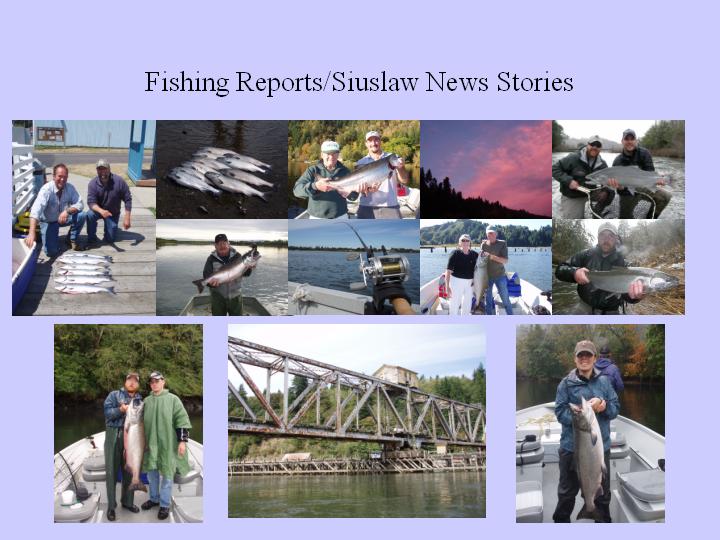
I got an e-mail a few weeks ago asking about navigable waterways in Oregon and urging me to let readers know a little bit about the history of issues surrounding navigable waterways. After making a few calls and doing some research, here’s what I found out: navigability is a complicated issue. And it seems to boil down to folks who feel strongly about land ownership rights and those who feel streams and streambanks are in the public trust.
The Quick And Dirty History
At statehood, the federal government granted the state of Oregon all navigable waterways. A navigable waterway was one that could be used in commerce. This was still a pretty gray area. Some streams might only be used for commerce at certain times of the year. Are they considered navigable year round or just in the winter? And what about moving logs? Certainly a small stream could be used to move timber if splash-dammed. Does that mean even very small streams are navigable? The answer is probably not. The basic idea behind granting the streams to the state of Oregon was to make sure people were free to travel through areas and could not be stopped by private landowners. Navigability – like many other issues – isn’t absolute. If a deed was issued that pre-dated statehood, it supercedes state law. There are some cases where landowners were deeded the streambed. That wouldn’t affect your ability to float a river, but it may stop you from anchoring or traveling (or fishing) below the average high water mark. I don’t know of anyone that has researched how many of these types of deeds are out there, but it’s generally believed to be few.
What This Means To You
In 2005 the Attorney General of Oregon issued an opinion on public use and state ownership of waterways. Navigable was defined as “capacity, in terms of length, width and depth, to enable boats to make successful progress through its waters.” In addition to allowing use of waterways up to the line of ordinary high water for boating, the opinion means that the doctrine authorizes other water-dependent uses such as swimming, fishing on foot, hunting from a boat and other similar activities requiring the use of the water. It is also important to note that state ownership includes the streambank to the mean high water mark. This can be determined by the presence of upland vegetation. The Department of State Lands press release can be viewed online at
http://www.oregon.gov/DSL/news/pr0531_ag_nav.shtml and the full opinion can be viewed online at www.doj.state.or.us/agoffice/agopinions/op8281.pdf.
Not all navigable waterways in Oregon have been declared as such. You can still get a ticket for trespassing, but it is unlikely to stand up in court. At least this is what I have been told. The hassle of the whole deal is that you’ll have to appear in court and defend yourself. One last final thought: I’d have to think many conflicts could be avoided by treading lightly, leaving a streambank cleaner than you find it, and practicing some common courtesy.
As always, I welcome your opinions on this and other issues.
See you on the water,
Action Jackson
(Please send comments or questions to Action Jackson at 268-6944 or www.actionjacksonfishing.com)

Subscribe to:
Post Comments (Atom)
8 comments:
Nice post and this post helped me alot in my college assignement. Say thank you you for your information.
Hi! Just wanted to let you know my husband and I have a piece of property on the Clatskanie River that was deeded pre-statehood. We are not trying to prevent usage of the river and never have. In fact we have regularly donated our docks for public use. We love seeing people enjoy the river. The DSL is now saying that a pre statehood deed means nothing and they are claiming ownership of our property. The problem isn't public use, it is the fact that now they want to charge lease on anything below the high tide and take the property that is legally ours. We have been paying taxes on this property and some of the landowners involved actually have buildings over high tide. We will be going to court, but not to prevent anyone from using the river. We will fight DSL from stealing what is rightfully ours. ORS 274.025 (our deed was vested before statehood). Not many of us around, we would like to here from anyone else who was vested pre-oregon statehood.
Hi
Very nice and intrestingss story.
Hi,
Nice post found here..Really like this history...
Thanks for posting this blog...
If some one wishes expert view on the topic of blogging after that i suggest him/her to pay a quick
visit this webpage, Keep up the fastidious work.
Also visit my blog post - webcamporno
adidas yeezy
air jordan
balenciaga sneakers
nike kyrie 5
golden goose shoes
fila
curry 4
cheap jordans
jordan retro
nike air max
l4i88g7m72 n9j95x5h18 t7u85t1v10 k0u75e2z98 y0q10w3d71 t2y84f1v93
i0o02q4e07 v4l96z8q03 m9j13q0t25 y0g29v5b14 k7l91g3v38 v6p99f9v93
Post a Comment